
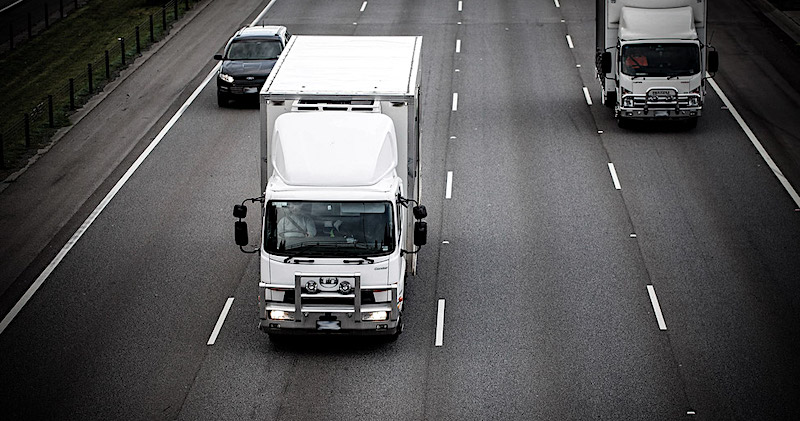
WA: Unsafe Trucks on the Increase
Truck safety has once again come under the spotlight as a blitz was held in WA’s south west region recently. The results were less than favourable, with about 85 heavy vehicles trucks being found with safety defects. The main issues that have arisen are faulty seat belts, bald tyres and cracked windscreens, all issues that can be detrimental to the safety of truckies and fellow road users. Trucking companies are putting lives at risk by failing to comply with the simplest of safety regulations and neglecting maintenance.
One instance even noted that a transport manager was purposely not using his maintenance budget in an attempt to gain an extra bonus for himself, and sadly other trucking companies are operating in the same manner.
A post at Safety Culture said:
A truck safety blitz last week in WA’s south west region revealed that almost half of nearly 200 heavy trucks stopped had safety defects. Police stopped 196 trucks on Forrest Highway between Mandurah and Harvey and issued 85 work orders. Traffic sergeant Gerard Murphy said the defects included faulty seat-belts, bald tyres and cracked windscreens. He says some trucking companies are putting the lives of drivers at risk by scrimping on maintenance costs. “One of the companies’ truck drivers said their transport manager, who was in charge of fleet maintenance, was basically being paid a monthly budget for coming under budget,” he said. “If that’s the way most trucking companies work, and I’m not saying that all trucking companies do that, then they need to take a good long hard look at themselves.” Sergeant Murphy says it is a safety issue.The fact that these vehicles are so large and heavy and can cause so much damage, should be motivation enough for trucking companies to attend to safety because of the number of lives that can be affected by a truck crash. Smooth tyres or worn out brakes on a vehicle with the power to cause so much destruction is unacceptable as it endangers the lives of all other road users. Industry insiders say safe rates are a major issue that will increase safety on our roads which has been an issue for so many years. The post goes on to state:
“When you’re looking at vehicles that are 25 or 30 tonnes pulling fairly large trailers, to have bald tyres, suspension that’s not working, brakes that aren’t operating correctly, seatbelts that aren’t working properly, it can be very concerning to the motorists who have to drive on the same road as them,” he said. Rick Burton of the Australian Workers Transport Union of WA says safety is a nation-wide problem. “We’ve been screaming for safe roads, that’s what it all comes down to, people are paid the correct rates, employees are paid the correct rates,” he said. “That allows for maintenance to be done on trucks and it allows for proper fatigue rates to occur, and therefore that would reduce the accidents on the road.” Mr Burton says too many people are dying. “We have over 300 people involved in the transport industry killed each year, and yet it just goes down as a statistic,” he said. “This has been going on for years and it’s just starting to come on the radar.”.Some of the basic guidelines for maintenance of heavy vehicles are as follows: When maintaining a diesel heavy vehicle, it is essential that owners and operators follow these four important steps:
- Operators, transport managers and drivers need to only use fuel that is free of contaminants and meets national fuel standards.
- Truckies should set the trucks emission control systems to the manufacturer”s specifications, particularly fuel pumps and injection timing.
- Drivers and operators should stick to a maintenance schedule. Vehicles need to be maintained at the regular intervals that have been recommended by the manufacturer or to an equivalent standard. The vehicle should be service regularly.
- Operators should ensure there is a system for fault identification and repair and drivers are aware of the procedure. It is important to have a system in place that lets you identify, record, assess and act on reported faults.
