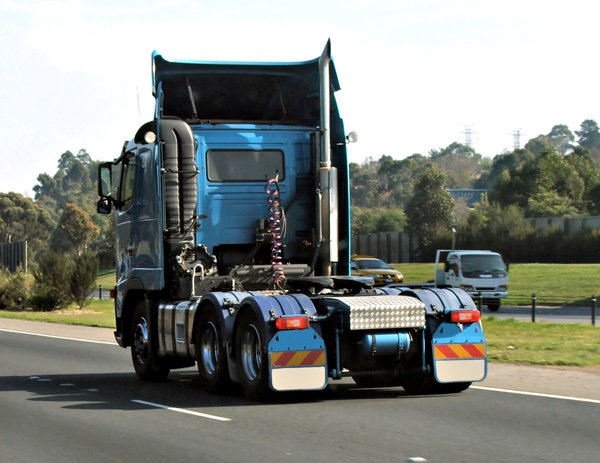
Making heavy vehicles safer on the nations roads is in the best interest of all Australian road users. If you are driving long distances on open roads they can be intimidating in the best weather and downright scary when the weather is bad – especially when they are travelling at speed on highways.
Will they stop, can they brake in time or maybe they wont even see you!
Technology is the newest player of the field to help ensure that heavy vehicles are safer on the roads. It is still being tested overseas and to our knowledge it hasn’t yet made it to Australian shores but it looks promising for road freight industries worldwide.
See the report and a video on this technology applied to heavy vehicles at http://news.consumerreports.org/:
Now, in an effort to help prevent dangerous crashes and fatalities involving these big rigs, truck makers and the federal government are evaluating crash-avoidance technology. Some of it has been available on cars for years, while some is specially adapted to trucks.
The compelling video below shows a Volvo truck equipped with automatic emergency braking. It clearly demonstrates how automatic braking, a system already available on many premium cars, can prevent a potentially fatal crash. The Volvo system featured in the video uses a forward radar and camera to monitor vehicles and a computer algorithm to apply the brakes. This new technology is now available on Volvo’s new FH Series truck.
About 90 percent of accidents are caused by driver error. The emerging safety aids focus on both getting the driver’s attention and on taking evasive action, if the driver does not.
Accelerating this initiative, the National Highway Traffic Safety Administration (NHTSA) proposed a rule last May to require electronic stability control (ESC) on large trucks and buses. Their research shows ESC could prevent up to 56 percent of rollovers and 14 percent of loss-of-control crashes. That would mean mitigating or preventing 2,329 crashes, 858 injuries, and about 60 fatalities.
In 2009, the Federal Motor Carrier Safety Administration analyzed the cost-benefit ratio of one such system, forward-collision warning systems for trucks. That study estimated that between 8,597 and 18,013 rear-end crashes involving trucks could have been prevented between 2001 to 2005 if these systems had been available.
A recent study by the Insurance Institute for Highway Safety (IIHS) looked at four crash-avoidance technologies: side-view assist, forward-collision warning, lane-departure warning, and vehicle stability control. The Institute determined that some truck-mounted technologies have a greater life-saving potential than others.
Specifically, the IIHS found that side-view assist could affect up to 39,000 crashes each year, including 2,000 serious and moderate injury crashes, and 79 fatal crashes.
Vehicle stability control has the potential to prevent up to 31,000 crashes annually, including up to 7,000 injury crashes and 439 fatalities per year.
Forward-collision warning has the potential to prevent as many as 31,000 crashes per year, including 3,000 injury crashes and 115 fatal crashes.
Lane-departure warning was less relevant compared to the other technologies, affecting up to 10,000 large truck crashes each year.
These systems are already becoming more common in mainstream passenger vehicles, and as the video demonstrates, they could make big trucks less dangerous to the rest of us in the future.
Source: http://news.consumerreports.org/cars/2013/01/life-saving-crash-avoidance-technology-heading-to-big-rigs.html
Heavy vehicle safety is essential not only for the drivers of these trucks but also for others that travel on the roads with them. These promising technological applications at this stage look like they can save many lives.
In the 2011 – 2012 financial year 225 people lost their lives in 200 accidents that involved heavy vehicles and whilst this rate is 20 per cent less that 5 years ago it is still fat too many.